🎉 Up to 70% Off Selected ItemsShop Sale
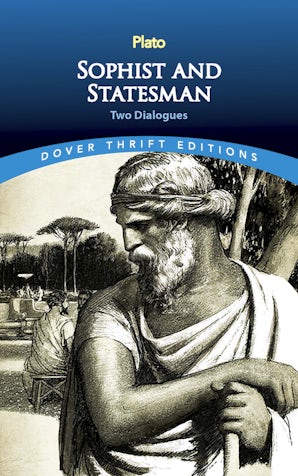
Sophist and Statesman
These two dialogues by the greatest of the ancient Greek philosophers explore a vital concern of a democratic society: how to define the special abilities and qualities that make a genuine statesman. They further examine the distinction between an authentic statesman and the sophist, an individual who pretends to be a statesman but lacks the essential knowledge, personal qualities, and philosophical outlook.
Written after Parmenides — in which the philosopher condemned his own theory of separate, immaterial forms — Sophist and Statesman are of special interest in terms of their reflection of Plato's conceptions of method and metaphysics. In addition, Statesman provides a transitional view of the author's political philosophy in the period between the Republic and the Laws. Together, the dialogues illuminate Plato's growing preoccupation with practical knowledge, offering a more informal and pragmatic approach than his earlier works. This edition features the acclaimed translations by Benjamin Jowett.
Written after Parmenides — in which the philosopher condemned his own theory of separate, immaterial forms — Sophist and Statesman are of special interest in terms of their reflection of Plato's conceptions of method and metaphysics. In addition, Statesman provides a transitional view of the author's political philosophy in the period between the Republic and the Laws. Together, the dialogues illuminate Plato's growing preoccupation with practical knowledge, offering a more informal and pragmatic approach than his earlier works. This edition features the acclaimed translations by Benjamin Jowett.
Reprint of standard editions.
philosophy of politics;statecraft;democratic society;ancient philosophers;translation;immaterial forms;plato;pragmatic;sophistry;metaphysics;platos republic;leadership;nations and states;parmenides;western philosophical tradition;democracy;politics;how to lead;qualities of leader;political leaders; Greek; Classical Attic; philosopher; Classical Greece; philosophy; Socrates; Aristotle; Western philosophy; Republic; Laws; dialogues$1.75
Original: $5.00
-65%Sophist and Statesman—
$5.00
$1.75Product Information
Product Information
Shipping & Returns
Shipping & Returns
Description
These two dialogues by the greatest of the ancient Greek philosophers explore a vital concern of a democratic society: how to define the special abilities and qualities that make a genuine statesman. They further examine the distinction between an authentic statesman and the sophist, an individual who pretends to be a statesman but lacks the essential knowledge, personal qualities, and philosophical outlook.
Written after Parmenides — in which the philosopher condemned his own theory of separate, immaterial forms — Sophist and Statesman are of special interest in terms of their reflection of Plato's conceptions of method and metaphysics. In addition, Statesman provides a transitional view of the author's political philosophy in the period between the Republic and the Laws. Together, the dialogues illuminate Plato's growing preoccupation with practical knowledge, offering a more informal and pragmatic approach than his earlier works. This edition features the acclaimed translations by Benjamin Jowett.
Written after Parmenides — in which the philosopher condemned his own theory of separate, immaterial forms — Sophist and Statesman are of special interest in terms of their reflection of Plato's conceptions of method and metaphysics. In addition, Statesman provides a transitional view of the author's political philosophy in the period between the Republic and the Laws. Together, the dialogues illuminate Plato's growing preoccupation with practical knowledge, offering a more informal and pragmatic approach than his earlier works. This edition features the acclaimed translations by Benjamin Jowett.
Reprint of standard editions.
philosophy of politics;statecraft;democratic society;ancient philosophers;translation;immaterial forms;plato;pragmatic;sophistry;metaphysics;platos republic;leadership;nations and states;parmenides;western philosophical tradition;democracy;politics;how to lead;qualities of leader;political leaders; Greek; Classical Attic; philosopher; Classical Greece; philosophy; Socrates; Aristotle; Western philosophy; Republic; Laws; dialogues