🎉 Up to 70% Off Selected ItemsShop Sale
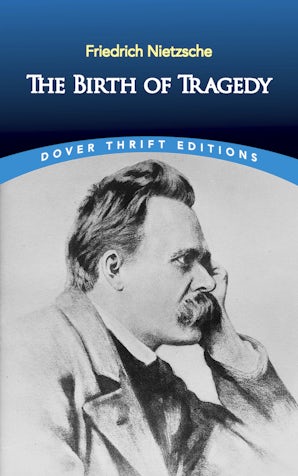
The Birth of Tragedy
Among the most influential philosophers of modern times, Friedrich Nietzsche (1844-1900) declared in this classic study that Greek tragedy achieved greatness through a fusion of elements of Apollonian restraint and control with Dionysian components of passion and the irrational. In Nietzsche's eyes, however, Greek tragedy had been destroyed by the rationalism and optimism of thinkers like Socrates. Nevertheless, he found in these ancient works the life-affirming concept that existence is still beautiful, however grim and depressing it may sometimes be. These and many other ideas are argued with passionate conviction in this challenging book, called by British classicist F. M. Cornford "a work of profound imaginative insight, which left the scholarship of a generation toiling in the rear."
Reprint of the Clifton P. Fadiman, 1927 edition.
greek tragedy;greek stage;psychological inquiry;german music;german spirit;gods apollo;reactions etc;cultural construction;chaotic forces;dramatic art;sophoclean tragedy;slave class;eternal suffering;dream images;stealing fire;german philosopher;modern cultural;god apollo;lyric poetry;aesthetic experience;german culture;chemical reactions;appear merely;greek literature;intellectual honesty;greek culture;classical greek;tragic hero;ancient greeks;prose stylist;opposing forces;human suffering;modern culture;greek gods;diametrically opposed;greek mythology;dionysiac;dionysos;silenus;dionysius;self-criticism;apollonian;hellenic;individuation;appolonian;alexandrian;philologist;philology;sophocles;dionysian;aeschylus;euripides;intoxication;1872;dionysus;socratic;oneness;primordial;drunkenness;aesthetics;rationality;ecstasy;socrates;primal;rebirth;eternally;chorus;plato;irrational;illusion;rational;jim morrison;walter kaufmann;wagner;books on classical greeks;books on modern cultures;books on german philosophers;books on greek stages;books on psychological inquiries;books on greek tragedies;books on german musics;books on german cultures;books on god apollos;books on greek cultures;books on dream images;books on tragic heros;books on cultural constructions;books on ancient greeks;books on dramatic arts;books on aesthetic experiences;books on human sufferings;books on lyric poetries;books on german spirits;books on greek literatures;books on chemical reactions$1.75
Original: $5.00
-65%The Birth of Tragedy—
$5.00
$1.75Product Information
Product Information
Shipping & Returns
Shipping & Returns
Description
Among the most influential philosophers of modern times, Friedrich Nietzsche (1844-1900) declared in this classic study that Greek tragedy achieved greatness through a fusion of elements of Apollonian restraint and control with Dionysian components of passion and the irrational. In Nietzsche's eyes, however, Greek tragedy had been destroyed by the rationalism and optimism of thinkers like Socrates. Nevertheless, he found in these ancient works the life-affirming concept that existence is still beautiful, however grim and depressing it may sometimes be. These and many other ideas are argued with passionate conviction in this challenging book, called by British classicist F. M. Cornford "a work of profound imaginative insight, which left the scholarship of a generation toiling in the rear."
Reprint of the Clifton P. Fadiman, 1927 edition.
greek tragedy;greek stage;psychological inquiry;german music;german spirit;gods apollo;reactions etc;cultural construction;chaotic forces;dramatic art;sophoclean tragedy;slave class;eternal suffering;dream images;stealing fire;german philosopher;modern cultural;god apollo;lyric poetry;aesthetic experience;german culture;chemical reactions;appear merely;greek literature;intellectual honesty;greek culture;classical greek;tragic hero;ancient greeks;prose stylist;opposing forces;human suffering;modern culture;greek gods;diametrically opposed;greek mythology;dionysiac;dionysos;silenus;dionysius;self-criticism;apollonian;hellenic;individuation;appolonian;alexandrian;philologist;philology;sophocles;dionysian;aeschylus;euripides;intoxication;1872;dionysus;socratic;oneness;primordial;drunkenness;aesthetics;rationality;ecstasy;socrates;primal;rebirth;eternally;chorus;plato;irrational;illusion;rational;jim morrison;walter kaufmann;wagner;books on classical greeks;books on modern cultures;books on german philosophers;books on greek stages;books on psychological inquiries;books on greek tragedies;books on german musics;books on german cultures;books on god apollos;books on greek cultures;books on dream images;books on tragic heros;books on cultural constructions;books on ancient greeks;books on dramatic arts;books on aesthetic experiences;books on human sufferings;books on lyric poetries;books on german spirits;books on greek literatures;books on chemical reactions