🎉 Up to 70% Off Selected ItemsShop Sale
HomeStore

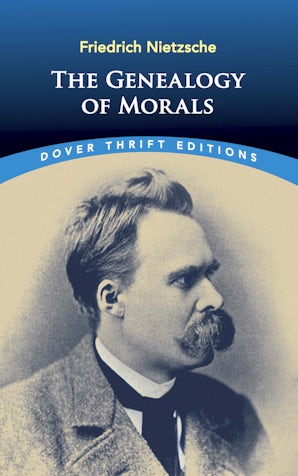
The Genealogy of Morals

Product image 1

The Genealogy of Morals

Written in response to a book on the origins of morality by his erstwhile friend Paul Rée, the three essays comprising The Genealogy of Morals — all three advancing the critique of Christian morality set forth in Beyond Good and Evil — are among Nietzsche's most sustained and cohesive work.
In the first essay — starting from a linguistic analysis of words such as "good," "bad," and "evil" — Nietzsche sets up a contrast between what he calls "master" morality and "slave" morality and shows how strength and action have often been replaced by passivity and nihilism. The next essay, looking into the origins of guilt and punishment, shows how the concept of justice was born — and how internalization of this concept led to the development of what people called "the soul." In the third essay, Nietzsche dissects the meaning of ascetic ideals.
It is not Nietzsche's intention to reject ascetic ideals, "slave" morality, or internalized values out of hand; his main concern is to show that culture and morality, rather than being eternal verities, are human-made. Whether or not you agree with all of his conclusions, his writing is of such clarity and brilliance that you will find reading The Genealogy of Morals nothing short of exhilarating.

Reprint of the Boni and Liveright, Inc., New York, 1918 edition.
es el;nietzschean philosophy;el texto;platonic philosophy;walter kaufman;master morality;wagner's music;civil life;en la;gay science;essay deals;western philosophical;noble soul;ecce homo;en el;lo que;slave morality;moral concepts;subject object;spake zarathustra;philosophical text;spoke zarathustra;german philosopher;eternal recurrence;value systems;modern philosophy;christian morality;value judgments;crazy uncle;animal instincts;poetic brilliance;herd mentality;slave revolt;philosophical treatise;modern western;gain power;de la;modern times;nineteenth century;human nature;obra;nuestra;tiempo;despisers;ressentiment;perspectivism;internalization;ubermensch;overman;como;asceticism;anti-christ;nihilist;rabble;heidegger;ascetic;aphorisms;genealogical;nihilism;wagner;genealogy;plato;superman;prophet;virtues;thinkers;philosophers;resentment;external;conscience;morals;spirits;punishment;books on moral concepts;books on german philosophers;books on spake zarathustras;books on value systems;books on gay sciences;books on essay deals;books on spoke zarathustras;books on platonic philosophies;books on philosophical texts;books on nietzschean philosophies;books on modern philosophies;books on subject objects;books on modern westerns;books on wagner 's musics;books on ecce homos;books on walter kaufman;books on en els;books on noble souls;books on civil lives;books on slave revolts;books on crazy uncles;books on animal instincts;books on christian moralities
$7.00
The Genealogy of Morals—
$7.00

Product Information

Shipping & Returns

Description

Written in response to a book on the origins of morality by his erstwhile friend Paul Rée, the three essays comprising The Genealogy of Morals — all three advancing the critique of Christian morality set forth in Beyond Good and Evil — are among Nietzsche's most sustained and cohesive work.
In the first essay — starting from a linguistic analysis of words such as "good," "bad," and "evil" — Nietzsche sets up a contrast between what he calls "master" morality and "slave" morality and shows how strength and action have often been replaced by passivity and nihilism. The next essay, looking into the origins of guilt and punishment, shows how the concept of justice was born — and how internalization of this concept led to the development of what people called "the soul." In the third essay, Nietzsche dissects the meaning of ascetic ideals.
It is not Nietzsche's intention to reject ascetic ideals, "slave" morality, or internalized values out of hand; his main concern is to show that culture and morality, rather than being eternal verities, are human-made. Whether or not you agree with all of his conclusions, his writing is of such clarity and brilliance that you will find reading The Genealogy of Morals nothing short of exhilarating.

Reprint of the Boni and Liveright, Inc., New York, 1918 edition.
es el;nietzschean philosophy;el texto;platonic philosophy;walter kaufman;master morality;wagner's music;civil life;en la;gay science;essay deals;western philosophical;noble soul;ecce homo;en el;lo que;slave morality;moral concepts;subject object;spake zarathustra;philosophical text;spoke zarathustra;german philosopher;eternal recurrence;value systems;modern philosophy;christian morality;value judgments;crazy uncle;animal instincts;poetic brilliance;herd mentality;slave revolt;philosophical treatise;modern western;gain power;de la;modern times;nineteenth century;human nature;obra;nuestra;tiempo;despisers;ressentiment;perspectivism;internalization;ubermensch;overman;como;asceticism;anti-christ;nihilist;rabble;heidegger;ascetic;aphorisms;genealogical;nihilism;wagner;genealogy;plato;superman;prophet;virtues;thinkers;philosophers;resentment;external;conscience;morals;spirits;punishment;books on moral concepts;books on german philosophers;books on spake zarathustras;books on value systems;books on gay sciences;books on essay deals;books on spoke zarathustras;books on platonic philosophies;books on philosophical texts;books on nietzschean philosophies;books on modern philosophies;books on subject objects;books on modern westerns;books on wagner 's musics;books on ecce homos;books on walter kaufman;books on en els;books on noble souls;books on civil lives;books on slave revolts;books on crazy uncles;books on animal instincts;books on christian moralities
The Genealogy of Morals | Dover Publications