🎉 Up to 70% Off Selected ItemsShop Sale
HomeStore

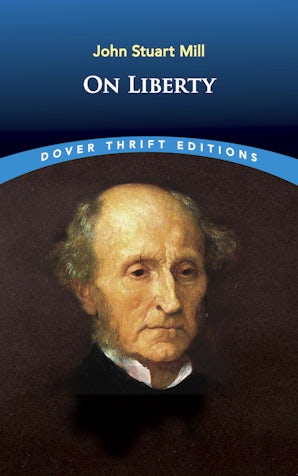
On Liberty

Product image 1

On Liberty

Discussed and debated from time immemorial, the concept of personal liberty went without codification until the 1859 publication of On Liberty. John Stuart Mill's complete and resolute dedication to the cause of freedom inspired this treatise, an enduring work through which the concept remains well known and studied.
The British economist, philosopher, and ethical theorist's argument does not focus on "the so-called Liberty of the Will…but Civil, or Social Liberty: the nature and limits of the power which can be legitimately exercised by society over the individual." Mill asks and answers provocative questions relating to the boundaries of social authority and individual sovereignty. In powerful and persuasive prose, he declares that there is "one very simple principle" regarding the use of coercion in society — one may only coerce others either to defend oneself or to defend others from harm.
The new edition offers students of political science and philosophy, in an inexpensive volume, one of the most influential studies on the nature of individual liberty and its role in a democratic society.

Reprint of the J. W. Parker and Son, London, 1859 edition.
individual liberties;moral crime;majority government;classic essay;criminal purposes;human liberty;latter subject;elected governments;supplementary essays;ultimate appeal;fourth amendment;libertarian philosophy;moral decency;moral reasons;prevented people;compulsory education;ex post;others' opinions;guide people;man's burden;primitive societies;opinion expressed;natural rights;classical liberalism;clearer perception;prevent harm;historically occurred;utilitarian argument;mob outside;sufficient warrant;resist attempts;extended argument;rightfully exercised;inherent differences;consenting adults;private property;civil liberties;political philosophy;public opinion;nineteenth century;human race;majorities;self-regarding;self-protection;utilitarianism;maxims;despotism;silencing;libertarians;1859;sovereign;accountable;individualism;warranted;marx;custom;tyranny;interference;restrictions;individuality;kitten;democratic;favour;legitimate;principle;hostile;limits;harriet taylor;john locke;america;united states;britain;england;books on classic essays;books on guide people;books on elected governments;books on fourth amendments;books on criminal purposes;books on human liberties;books on primitive societies;books on moral crimes;books on latter subjects;books on majority governments;books on ex posts;books on libertarian philosophies;books on compulsory educations;books on natural rights;books on individual liberties;books on moral reasons;books on others' opinions
$2.80

Original: $8.00

-65%
On Liberty—

$8.00

$2.80

Product Information

Shipping & Returns

Description

Discussed and debated from time immemorial, the concept of personal liberty went without codification until the 1859 publication of On Liberty. John Stuart Mill's complete and resolute dedication to the cause of freedom inspired this treatise, an enduring work through which the concept remains well known and studied.
The British economist, philosopher, and ethical theorist's argument does not focus on "the so-called Liberty of the Will…but Civil, or Social Liberty: the nature and limits of the power which can be legitimately exercised by society over the individual." Mill asks and answers provocative questions relating to the boundaries of social authority and individual sovereignty. In powerful and persuasive prose, he declares that there is "one very simple principle" regarding the use of coercion in society — one may only coerce others either to defend oneself or to defend others from harm.
The new edition offers students of political science and philosophy, in an inexpensive volume, one of the most influential studies on the nature of individual liberty and its role in a democratic society.

Reprint of the J. W. Parker and Son, London, 1859 edition.
individual liberties;moral crime;majority government;classic essay;criminal purposes;human liberty;latter subject;elected governments;supplementary essays;ultimate appeal;fourth amendment;libertarian philosophy;moral decency;moral reasons;prevented people;compulsory education;ex post;others' opinions;guide people;man's burden;primitive societies;opinion expressed;natural rights;classical liberalism;clearer perception;prevent harm;historically occurred;utilitarian argument;mob outside;sufficient warrant;resist attempts;extended argument;rightfully exercised;inherent differences;consenting adults;private property;civil liberties;political philosophy;public opinion;nineteenth century;human race;majorities;self-regarding;self-protection;utilitarianism;maxims;despotism;silencing;libertarians;1859;sovereign;accountable;individualism;warranted;marx;custom;tyranny;interference;restrictions;individuality;kitten;democratic;favour;legitimate;principle;hostile;limits;harriet taylor;john locke;america;united states;britain;england;books on classic essays;books on guide people;books on elected governments;books on fourth amendments;books on criminal purposes;books on human liberties;books on primitive societies;books on moral crimes;books on latter subjects;books on majority governments;books on ex posts;books on libertarian philosophies;books on compulsory educations;books on natural rights;books on individual liberties;books on moral reasons;books on others' opinions
On Liberty | Dover Publications