🎉 Up to 70% Off Selected ItemsShop Sale
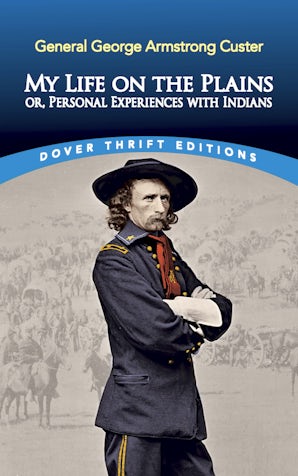
My Life on the Plains
An officer and cavalry commander during the Civil War and Indian wars, General George Armstrong Custer (1839–76) was well-known in his lifetime for his personal daring and his aggressive approach to warfare. After his "last stand" in 1876, he was even more famous as the commander who led his entire unit to annihilation by a massive coalition of Native American tribes at the Battle of the Little Bighorn.
A few years before the fatal clash, Custer published a series of reminiscences concerning his participation in the U.S. Army's 1867–69 campaigns against the Plains Indians. The evocative accounts, written during one of Custer's semiretirements rather than from the field, tell of marching, camping, furious firefights, and ruthless slaughter on both sides. In addition to its value as a document of military history, this book offers fascinating insights into the notorious general's character, from his enthusiasm for self-mythologizing to the rash behavior that led to his demise.
A few years before the fatal clash, Custer published a series of reminiscences concerning his participation in the U.S. Army's 1867–69 campaigns against the Plains Indians. The evocative accounts, written during one of Custer's semiretirements rather than from the field, tell of marching, camping, furious firefights, and ruthless slaughter on both sides. In addition to its value as a document of military history, this book offers fascinating insights into the notorious general's character, from his enthusiasm for self-mythologizing to the rash behavior that led to his demise.
Reprint of the Sheldon & Co., New York, 1874 edition.
George Custer; Indian wars; Civil war; George Armstrong Custer; Plains Indians; Native American history; 19th Century; Little Big Horn; Custer's Last Stand; General Custer$2.80
Original: $8.00
-65%My Life on the Plains—
$8.00
$2.80Product Information
Product Information
Shipping & Returns
Shipping & Returns
Description
An officer and cavalry commander during the Civil War and Indian wars, General George Armstrong Custer (1839–76) was well-known in his lifetime for his personal daring and his aggressive approach to warfare. After his "last stand" in 1876, he was even more famous as the commander who led his entire unit to annihilation by a massive coalition of Native American tribes at the Battle of the Little Bighorn.
A few years before the fatal clash, Custer published a series of reminiscences concerning his participation in the U.S. Army's 1867–69 campaigns against the Plains Indians. The evocative accounts, written during one of Custer's semiretirements rather than from the field, tell of marching, camping, furious firefights, and ruthless slaughter on both sides. In addition to its value as a document of military history, this book offers fascinating insights into the notorious general's character, from his enthusiasm for self-mythologizing to the rash behavior that led to his demise.
A few years before the fatal clash, Custer published a series of reminiscences concerning his participation in the U.S. Army's 1867–69 campaigns against the Plains Indians. The evocative accounts, written during one of Custer's semiretirements rather than from the field, tell of marching, camping, furious firefights, and ruthless slaughter on both sides. In addition to its value as a document of military history, this book offers fascinating insights into the notorious general's character, from his enthusiasm for self-mythologizing to the rash behavior that led to his demise.
Reprint of the Sheldon & Co., New York, 1874 edition.
George Custer; Indian wars; Civil war; George Armstrong Custer; Plains Indians; Native American history; 19th Century; Little Big Horn; Custer's Last Stand; General Custer