🎉 Up to 70% Off Selected ItemsShop Sale
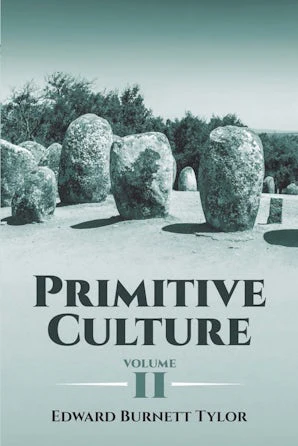
Primitive Culture, Volume II
The first Professor of Anthropology at the University of Oxford, Edward B. Tylor, defined the term "culture" for modern readers in this groundbreaking work. Initially published in 1871, this classic two-volume study explores the full range of learned human behavior patterns in terms of the beliefs, wisdom, laws, artistic achievements, and mores that constitute a society. The formation of anthropology as a scientific discipline began with this work, which continues to exercise a profound influence on anthropologic studies.
The shared history of all humans, a common ground that evolved from primitive roots, constitutes the basis for Tylor's model of development. Drawing upon a worldwide variety of beliefs, rituals, and languages, the author illustrates an all-inclusive pattern of progress. His methods inaugurated the use of statistical data in anthropology, a standard procedure today but a landmark for his time. Volume I of Primitive Culture examines social evolution, language, and myth. The focus of this second volume is animism in society, which explores the tremendous diversity of thinking related to the concepts of the soul and religion as well as the marked similarities of spiritual beliefs.
The shared history of all humans, a common ground that evolved from primitive roots, constitutes the basis for Tylor's model of development. Drawing upon a worldwide variety of beliefs, rituals, and languages, the author illustrates an all-inclusive pattern of progress. His methods inaugurated the use of statistical data in anthropology, a standard procedure today but a landmark for his time. Volume I of Primitive Culture examines social evolution, language, and myth. The focus of this second volume is animism in society, which explores the tremendous diversity of thinking related to the concepts of the soul and religion as well as the marked similarities of spiritual beliefs.
Reprint of the John Murray, London, 1871 edition.
non-fiction; cultural studies; cultural evolution; anthropologic studies; philosophy; 19th century cultural sciences; primitive cultures; complex nature of primitive culture; learned human behavior; understanding the formation of knowledge and belief; forming customs; capabilities and habits acquired by man; philosophy & social aspects; evolution,$5.93
Original: $16.95
-65%Primitive Culture, Volume II—
$16.95
$5.93Product Information
Product Information
Shipping & Returns
Shipping & Returns
Description
The first Professor of Anthropology at the University of Oxford, Edward B. Tylor, defined the term "culture" for modern readers in this groundbreaking work. Initially published in 1871, this classic two-volume study explores the full range of learned human behavior patterns in terms of the beliefs, wisdom, laws, artistic achievements, and mores that constitute a society. The formation of anthropology as a scientific discipline began with this work, which continues to exercise a profound influence on anthropologic studies.
The shared history of all humans, a common ground that evolved from primitive roots, constitutes the basis for Tylor's model of development. Drawing upon a worldwide variety of beliefs, rituals, and languages, the author illustrates an all-inclusive pattern of progress. His methods inaugurated the use of statistical data in anthropology, a standard procedure today but a landmark for his time. Volume I of Primitive Culture examines social evolution, language, and myth. The focus of this second volume is animism in society, which explores the tremendous diversity of thinking related to the concepts of the soul and religion as well as the marked similarities of spiritual beliefs.
The shared history of all humans, a common ground that evolved from primitive roots, constitutes the basis for Tylor's model of development. Drawing upon a worldwide variety of beliefs, rituals, and languages, the author illustrates an all-inclusive pattern of progress. His methods inaugurated the use of statistical data in anthropology, a standard procedure today but a landmark for his time. Volume I of Primitive Culture examines social evolution, language, and myth. The focus of this second volume is animism in society, which explores the tremendous diversity of thinking related to the concepts of the soul and religion as well as the marked similarities of spiritual beliefs.
Reprint of the John Murray, London, 1871 edition.
non-fiction; cultural studies; cultural evolution; anthropologic studies; philosophy; 19th century cultural sciences; primitive cultures; complex nature of primitive culture; learned human behavior; understanding the formation of knowledge and belief; forming customs; capabilities and habits acquired by man; philosophy & social aspects; evolution,