🎉 Up to 70% Off Selected ItemsShop Sale
Evelina
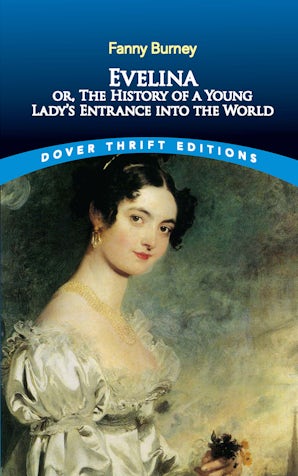
Good-looking, kind-hearted Evelina Anville has grown up in rural obscurity as the ward of a country parson. At the age of seventeen, she begins her progress from provincial life to fashionable London ― a transition that's complicated by vulgar relatives and her own naiveté. Evelina's shrewd intelligence, however, perceives the hypocrisy behind the refined façades as she learns to balance the honesty and simplicity of her upbringing with the sophisticated etiquette of high society.
Written in the form of letters, this 1778 novel offers an intimate look at coming-of-age among England's eighteenth-century upper crust. Evelina's comic misadventures provide a subtle commentary on some of the problems faced by her contemporaries, from women's limited roles to class snobbery and prejudice. Fanny Burney's witty approach to manners and mores was a significant influence on Jane Austen, and her deft combination of satire, sentimentality, and farce provides sparkling entertainment.
Reprint of Thomas Lowndes, London, 1778 edition. historical fiction;women's literature;18th century english literature;early feminism;sentiment novel;women's limited roles;class snobbery;sentimentality;farce;england's upper crust;etiquette of high society;social prejudices;upper class women of 18th century;romantic heroines;comic behavior;woman authors;cultural faux pas;female independence;antiquated society;social mores;social satire;class distinctions;provincial upbringing;melodrama;womens fiction;romance;love;Jane Austen; Sentimental novel; domestic fiction
Written in the form of letters, this 1778 novel offers an intimate look at coming-of-age among England's eighteenth-century upper crust. Evelina's comic misadventures provide a subtle commentary on some of the problems faced by her contemporaries, from women's limited roles to class snobbery and prejudice. Fanny Burney's witty approach to manners and mores was a significant influence on Jane Austen, and her deft combination of satire, sentimentality, and farce provides sparkling entertainment.
Reprint of Thomas Lowndes, London, 1778 edition. historical fiction;women's literature;18th century english literature;early feminism;sentiment novel;women's limited roles;class snobbery;sentimentality;farce;england's upper crust;etiquette of high society;social prejudices;upper class women of 18th century;romantic heroines;comic behavior;woman authors;cultural faux pas;female independence;antiquated society;social mores;social satire;class distinctions;provincial upbringing;melodrama;womens fiction;romance;love;Jane Austen; Sentimental novel; domestic fiction
$5.50
Evelina—
$5.50
Product Information
Product Information
Shipping & Returns
Shipping & Returns
Description
Good-looking, kind-hearted Evelina Anville has grown up in rural obscurity as the ward of a country parson. At the age of seventeen, she begins her progress from provincial life to fashionable London ― a transition that's complicated by vulgar relatives and her own naiveté. Evelina's shrewd intelligence, however, perceives the hypocrisy behind the refined façades as she learns to balance the honesty and simplicity of her upbringing with the sophisticated etiquette of high society.
Written in the form of letters, this 1778 novel offers an intimate look at coming-of-age among England's eighteenth-century upper crust. Evelina's comic misadventures provide a subtle commentary on some of the problems faced by her contemporaries, from women's limited roles to class snobbery and prejudice. Fanny Burney's witty approach to manners and mores was a significant influence on Jane Austen, and her deft combination of satire, sentimentality, and farce provides sparkling entertainment.
Reprint of Thomas Lowndes, London, 1778 edition. historical fiction;women's literature;18th century english literature;early feminism;sentiment novel;women's limited roles;class snobbery;sentimentality;farce;england's upper crust;etiquette of high society;social prejudices;upper class women of 18th century;romantic heroines;comic behavior;woman authors;cultural faux pas;female independence;antiquated society;social mores;social satire;class distinctions;provincial upbringing;melodrama;womens fiction;romance;love;Jane Austen; Sentimental novel; domestic fiction
Written in the form of letters, this 1778 novel offers an intimate look at coming-of-age among England's eighteenth-century upper crust. Evelina's comic misadventures provide a subtle commentary on some of the problems faced by her contemporaries, from women's limited roles to class snobbery and prejudice. Fanny Burney's witty approach to manners and mores was a significant influence on Jane Austen, and her deft combination of satire, sentimentality, and farce provides sparkling entertainment.
Reprint of Thomas Lowndes, London, 1778 edition. historical fiction;women's literature;18th century english literature;early feminism;sentiment novel;women's limited roles;class snobbery;sentimentality;farce;england's upper crust;etiquette of high society;social prejudices;upper class women of 18th century;romantic heroines;comic behavior;woman authors;cultural faux pas;female independence;antiquated society;social mores;social satire;class distinctions;provincial upbringing;melodrama;womens fiction;romance;love;Jane Austen; Sentimental novel; domestic fiction