🎉 Up to 70% Off Selected ItemsShop Sale
The Beautiful Necessity
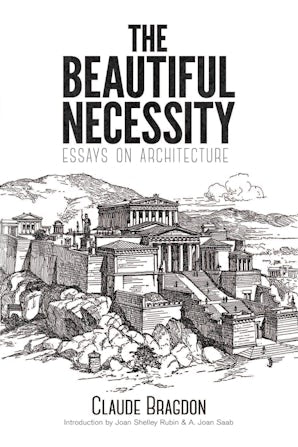
A noted American architect of the early twentieth century discusses universal principles behind the harmonious forms and proportions of ancient and modern buildings. Seven essays by Claude Bragdon offer a master class in the architectural union of art, beauty, and science. His observations and analyses encompass a tremendous variety of buildings, from Gothic cathedrals to Giotto's Campanile to the Taj Mahal, and his examples extend far beyond architecture to the natural symmetry found in the feathers of a peacock's tail, snowflakes, plants, and the human face.
"Art in all its manifestations is an expression of the cosmic life," notes the author, "and its symbols constitute a language by means of which this life is published and represented. Art is at all times subject to the 'Beautiful Necessity' of proclaiming the 'world order'." Bragdon's theories are illuminated by his graceful black-and-white line drawings, which portray the essentials of line and proportion as expressed in many well-known buildings and paintings.
"Art in all its manifestations is an expression of the cosmic life," notes the author, "and its symbols constitute a language by means of which this life is published and represented. Art is at all times subject to the 'Beautiful Necessity' of proclaiming the 'world order'." Bragdon's theories are illuminated by his graceful black-and-white line drawings, which portray the essentials of line and proportion as expressed in many well-known buildings and paintings.
Reprint of The Beautiful Necessity: Seven Essays on Theosophy and Architecture, The Manas Press, Rochester, New York, 1910.
20th century architects;essays on historical architecture;architectural art;observations and analysis;gothic architecture;fibonacci sequence;illustrated drawings;line drawings;blueprints;design proportions;architecture books;architectural design;styles in architecture;essays on architecture;natural symmetry;harmonious forms in architecture;building proportions;ancient buildings;modern buildings;american architecture;architecture$3.48
Original: $9.95
-65%The Beautiful Necessity—
$9.95
$3.48Product Information
Product Information
Shipping & Returns
Shipping & Returns
Description
A noted American architect of the early twentieth century discusses universal principles behind the harmonious forms and proportions of ancient and modern buildings. Seven essays by Claude Bragdon offer a master class in the architectural union of art, beauty, and science. His observations and analyses encompass a tremendous variety of buildings, from Gothic cathedrals to Giotto's Campanile to the Taj Mahal, and his examples extend far beyond architecture to the natural symmetry found in the feathers of a peacock's tail, snowflakes, plants, and the human face.
"Art in all its manifestations is an expression of the cosmic life," notes the author, "and its symbols constitute a language by means of which this life is published and represented. Art is at all times subject to the 'Beautiful Necessity' of proclaiming the 'world order'." Bragdon's theories are illuminated by his graceful black-and-white line drawings, which portray the essentials of line and proportion as expressed in many well-known buildings and paintings.
"Art in all its manifestations is an expression of the cosmic life," notes the author, "and its symbols constitute a language by means of which this life is published and represented. Art is at all times subject to the 'Beautiful Necessity' of proclaiming the 'world order'." Bragdon's theories are illuminated by his graceful black-and-white line drawings, which portray the essentials of line and proportion as expressed in many well-known buildings and paintings.
Reprint of The Beautiful Necessity: Seven Essays on Theosophy and Architecture, The Manas Press, Rochester, New York, 1910.
20th century architects;essays on historical architecture;architectural art;observations and analysis;gothic architecture;fibonacci sequence;illustrated drawings;line drawings;blueprints;design proportions;architecture books;architectural design;styles in architecture;essays on architecture;natural symmetry;harmonious forms in architecture;building proportions;ancient buildings;modern buildings;american architecture;architecture