🎉 Up to 70% Off Selected ItemsShop Sale
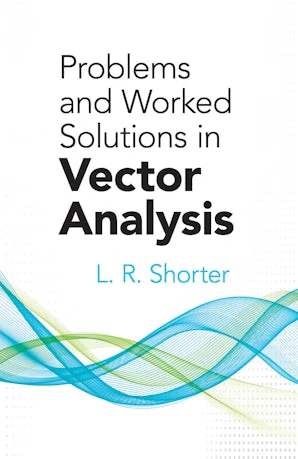
Problems and Worked Solutions in Vector Analysis
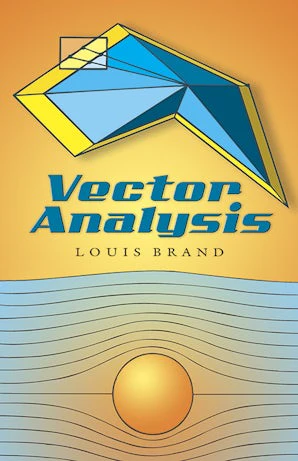
"A handy book like this," noted The Mathematical Gazette, "will fill a great want." Devoted to fully worked out examples, this unique text constitutes a self-contained introductory course in vector analysis for undergraduate and graduate students of applied mathematics.
Opening chapters define vector addition and subtraction, show how to resolve and determine the direction of two or more vectors, and explain systems of coordinates, vector equations of a plane and straight line, relative velocity and acceleration, and infinitely small vectors. The following chapters deal with scalar and vector multiplication, axial and polar vectors, areas, differentiation of vector functions, gradient, curl, divergence, and analytical properties of the position vector. Applications of vector analysis to dynamics and physics are the focus of the final chapter, including such topics as moving rigid bodies, energy of a moving rigid system, central forces, equipotential surfaces, Gauss's theorem, and vector flow.
introductory course;undergrad;vector addition;vector subtraction;resolve vectors;coordinate systems;moving rigid bodies;energy of a moving rigid system;mathematics;advanced mathematics;physics;vector analysis;applied mathematics;relative velocity;self study;mathematical reference;advanced undergraduate;graduate study;graduate student;problems worked and solutions;college;complex;astronauts;spaceships;science;school;students and teachers;theoretical;scientists
Opening chapters define vector addition and subtraction, show how to resolve and determine the direction of two or more vectors, and explain systems of coordinates, vector equations of a plane and straight line, relative velocity and acceleration, and infinitely small vectors. The following chapters deal with scalar and vector multiplication, axial and polar vectors, areas, differentiation of vector functions, gradient, curl, divergence, and analytical properties of the position vector. Applications of vector analysis to dynamics and physics are the focus of the final chapter, including such topics as moving rigid bodies, energy of a moving rigid system, central forces, equipotential surfaces, Gauss's theorem, and vector flow.
Reprint of the 1961 Dover edition, originally published as Introduction to Vector Analysis, Macmillan and Company, Ltd., London, 1931.
$6.98
Original: $19.95
-65%Problems and Worked Solutions in Vector Analysis—
$19.95
$6.98Product Information
Product Information
Shipping & Returns
Shipping & Returns
Description
"A handy book like this," noted The Mathematical Gazette, "will fill a great want." Devoted to fully worked out examples, this unique text constitutes a self-contained introductory course in vector analysis for undergraduate and graduate students of applied mathematics.
Opening chapters define vector addition and subtraction, show how to resolve and determine the direction of two or more vectors, and explain systems of coordinates, vector equations of a plane and straight line, relative velocity and acceleration, and infinitely small vectors. The following chapters deal with scalar and vector multiplication, axial and polar vectors, areas, differentiation of vector functions, gradient, curl, divergence, and analytical properties of the position vector. Applications of vector analysis to dynamics and physics are the focus of the final chapter, including such topics as moving rigid bodies, energy of a moving rigid system, central forces, equipotential surfaces, Gauss's theorem, and vector flow.
introductory course;undergrad;vector addition;vector subtraction;resolve vectors;coordinate systems;moving rigid bodies;energy of a moving rigid system;mathematics;advanced mathematics;physics;vector analysis;applied mathematics;relative velocity;self study;mathematical reference;advanced undergraduate;graduate study;graduate student;problems worked and solutions;college;complex;astronauts;spaceships;science;school;students and teachers;theoretical;scientists
Opening chapters define vector addition and subtraction, show how to resolve and determine the direction of two or more vectors, and explain systems of coordinates, vector equations of a plane and straight line, relative velocity and acceleration, and infinitely small vectors. The following chapters deal with scalar and vector multiplication, axial and polar vectors, areas, differentiation of vector functions, gradient, curl, divergence, and analytical properties of the position vector. Applications of vector analysis to dynamics and physics are the focus of the final chapter, including such topics as moving rigid bodies, energy of a moving rigid system, central forces, equipotential surfaces, Gauss's theorem, and vector flow.
Reprint of the 1961 Dover edition, originally published as Introduction to Vector Analysis, Macmillan and Company, Ltd., London, 1931.