🎉 Up to 70% Off Selected ItemsShop Sale
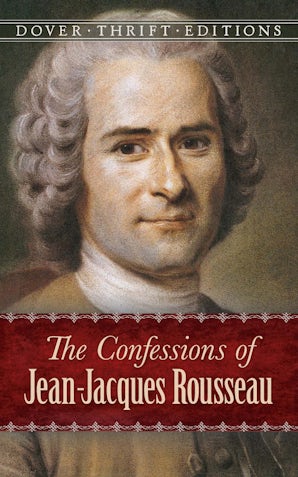
The Confessions of Jean-Jacques Rousseau
Only a few popular autobiographies existed before philosopher, author, and composer Jean-Jacques Rousseau (1712–78) published his Confessions. Rousseau wrote treatises on education and politics as well as novels and operas, and as one of the most influential and controversial of the Enlightenment thinkers, he inspired the leaders of the French Revolution. His memoir is regarded as the first modern autobiography, in which the writer defined his life mainly in terms of his worldly experiences and personal feelings.
These memoirs constitute the main source of Rousseau's reputation as a leader in the transition from eighteenth-century reason to nineteenth-century romanticism. His emphasis on the effects of childhood experiences anticipates the psychology of Sigmund Freud, and his conviction that the individual is worthy of account forms a major contribution to progressive social and political thought. The book has inspired many imitations in autobiography, fiction, and poetry, and it has influenced the works of Proust, Goethe, Tolstoy, and countless others.
These memoirs constitute the main source of Rousseau's reputation as a leader in the transition from eighteenth-century reason to nineteenth-century romanticism. His emphasis on the effects of childhood experiences anticipates the psychology of Sigmund Freud, and his conviction that the individual is worthy of account forms a major contribution to progressive social and political thought. The book has inspired many imitations in autobiography, fiction, and poetry, and it has influenced the works of Proust, Goethe, Tolstoy, and countless others.
Reprint from standard editions.
western literature;de medici;classic literature;literary memoirs;french revolution;speak memory;french philosophers;literary critics;natural liberty;legislative power;jean jacques;legitimate political;born equal;maintaining power;lorenzo de;political authority;team leaders;job application;ts eliot;representative government;benevolent tyrant;philosopher's life;maintain power;sun tzu;labour leader;past emotions;contemporary business;machiavelli wrote;influential political;literary salons;waste land;modern political;government leader;cesare borgia;social contract;political ideas;civil society;norton critical;grail myth;foundling hospital;renaissance italy;translator's note;political philosophy;sixteenth century;political science;founding fathers;twentieth century;human nature;tennyson;machiavellis;dover;dostoevsky;chanakya;thrift;1762;frankenstein;principalities;autobiographies;assemblies;penguin;prufrock;monarchies;niccolo;marie;18th;florentine;emile;therese;discourses;voltaire;machiavellian;hobbes;realpolitik;sovereign;wasteland;inequality;locke;princes;ruler;enlightenment;equality;democracy;updated;zany;social contract theory;france;paris;america;geneva;books on jean jacques;books on legislative powers;books on team leaders;books on de medici;books on classic literatures;books on literary critics;books on political authorities;books on natural liberties;books on western literatures;books on literary memoirs;books on french revolutions;books on representative governments$6.00
The Confessions of Jean-Jacques Rousseau—
$6.00
Product Information
Product Information
Shipping & Returns
Shipping & Returns
Description
Only a few popular autobiographies existed before philosopher, author, and composer Jean-Jacques Rousseau (1712–78) published his Confessions. Rousseau wrote treatises on education and politics as well as novels and operas, and as one of the most influential and controversial of the Enlightenment thinkers, he inspired the leaders of the French Revolution. His memoir is regarded as the first modern autobiography, in which the writer defined his life mainly in terms of his worldly experiences and personal feelings.
These memoirs constitute the main source of Rousseau's reputation as a leader in the transition from eighteenth-century reason to nineteenth-century romanticism. His emphasis on the effects of childhood experiences anticipates the psychology of Sigmund Freud, and his conviction that the individual is worthy of account forms a major contribution to progressive social and political thought. The book has inspired many imitations in autobiography, fiction, and poetry, and it has influenced the works of Proust, Goethe, Tolstoy, and countless others.
These memoirs constitute the main source of Rousseau's reputation as a leader in the transition from eighteenth-century reason to nineteenth-century romanticism. His emphasis on the effects of childhood experiences anticipates the psychology of Sigmund Freud, and his conviction that the individual is worthy of account forms a major contribution to progressive social and political thought. The book has inspired many imitations in autobiography, fiction, and poetry, and it has influenced the works of Proust, Goethe, Tolstoy, and countless others.
Reprint from standard editions.
western literature;de medici;classic literature;literary memoirs;french revolution;speak memory;french philosophers;literary critics;natural liberty;legislative power;jean jacques;legitimate political;born equal;maintaining power;lorenzo de;political authority;team leaders;job application;ts eliot;representative government;benevolent tyrant;philosopher's life;maintain power;sun tzu;labour leader;past emotions;contemporary business;machiavelli wrote;influential political;literary salons;waste land;modern political;government leader;cesare borgia;social contract;political ideas;civil society;norton critical;grail myth;foundling hospital;renaissance italy;translator's note;political philosophy;sixteenth century;political science;founding fathers;twentieth century;human nature;tennyson;machiavellis;dover;dostoevsky;chanakya;thrift;1762;frankenstein;principalities;autobiographies;assemblies;penguin;prufrock;monarchies;niccolo;marie;18th;florentine;emile;therese;discourses;voltaire;machiavellian;hobbes;realpolitik;sovereign;wasteland;inequality;locke;princes;ruler;enlightenment;equality;democracy;updated;zany;social contract theory;france;paris;america;geneva;books on jean jacques;books on legislative powers;books on team leaders;books on de medici;books on classic literatures;books on literary critics;books on political authorities;books on natural liberties;books on western literatures;books on literary memoirs;books on french revolutions;books on representative governments