🎉 Up to 70% Off Selected ItemsShop Sale
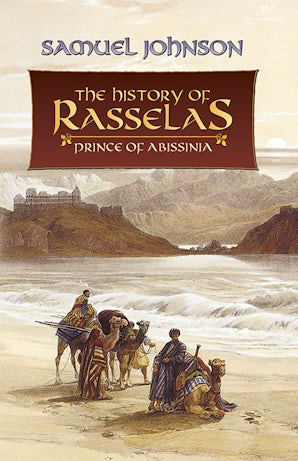
The History of Rasselas
Simply written, funny, and compulsively readable, this fine little book has been heralded as one of the finest examples of English prose and offers a compelling glimpse of Samuel Johnson’s moral views. Dashed out over the course of a single week to pay for his mother’s funeral, Johnson’s only novel was the outcome of a lifetime’s thoughts and experiences.
A philosophical romance tracing the pilgrimage of an African prince and his companions to Egypt, Rasselas ponders a number of subjects — romantic love, flights of imagination, the great discoveries of science, and speculations about the meaning of happiness — all of which, Johnson implies, encourage man with false hopes and unrealistic estimates of what life has to offer.
Directed specifically against eighteenth-century optimism and, more generally, against all simple formulas for achieving happiness, Rasselas has often been compared with Voltaire’s Candide — which was published only a few weeks before Johnson’s work. Both novels have deservedly attained the status of classics.
A philosophical romance tracing the pilgrimage of an African prince and his companions to Egypt, Rasselas ponders a number of subjects — romantic love, flights of imagination, the great discoveries of science, and speculations about the meaning of happiness — all of which, Johnson implies, encourage man with false hopes and unrealistic estimates of what life has to offer.
Directed specifically against eighteenth-century optimism and, more generally, against all simple formulas for achieving happiness, Rasselas has often been compared with Voltaire’s Candide — which was published only a few weeks before Johnson’s work. Both novels have deservedly attained the status of classics.
Reprint of The Prince of Abissinia, Second Edition, R. and J. Dodsley and W. Johnson, London, 1759.
$2.43
Original: $6.95
-65%The History of Rasselas—
$6.95
$2.43Product Information
Product Information
Shipping & Returns
Shipping & Returns
Description
Simply written, funny, and compulsively readable, this fine little book has been heralded as one of the finest examples of English prose and offers a compelling glimpse of Samuel Johnson’s moral views. Dashed out over the course of a single week to pay for his mother’s funeral, Johnson’s only novel was the outcome of a lifetime’s thoughts and experiences.
A philosophical romance tracing the pilgrimage of an African prince and his companions to Egypt, Rasselas ponders a number of subjects — romantic love, flights of imagination, the great discoveries of science, and speculations about the meaning of happiness — all of which, Johnson implies, encourage man with false hopes and unrealistic estimates of what life has to offer.
Directed specifically against eighteenth-century optimism and, more generally, against all simple formulas for achieving happiness, Rasselas has often been compared with Voltaire’s Candide — which was published only a few weeks before Johnson’s work. Both novels have deservedly attained the status of classics.
A philosophical romance tracing the pilgrimage of an African prince and his companions to Egypt, Rasselas ponders a number of subjects — romantic love, flights of imagination, the great discoveries of science, and speculations about the meaning of happiness — all of which, Johnson implies, encourage man with false hopes and unrealistic estimates of what life has to offer.
Directed specifically against eighteenth-century optimism and, more generally, against all simple formulas for achieving happiness, Rasselas has often been compared with Voltaire’s Candide — which was published only a few weeks before Johnson’s work. Both novels have deservedly attained the status of classics.
Reprint of The Prince of Abissinia, Second Edition, R. and J. Dodsley and W. Johnson, London, 1759.