Tartuffe
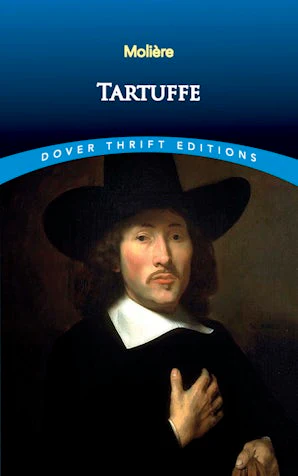
Renowned for his satirical works, Molière (Jean-Baptiste Poquelin, 1622–1673) delighted in lampooning the social pretensions and conceits of 17th-century French society. In this 1664 verse comedy with serious overtones, Tartuffe, a penniless scoundrel and religious poseur, is invited by a gullible benefactor to live in his home.
Imposing a rigidly puritanical regimen on the formerly happy household, Tartuffe wreaks havoc among family members. He breaks off the daughter's engagement, attempts to seduce the wife of his host, acquires his patron's property, and eventually resorts to blackmail and extortion. But ultimately, his schemes and malicious deeds lead to his own downfall.
Attacked by the Church and twice suppressed, Tartuffe opened to packed houses in 1669. Teeming with lively humor and satirical plot devices, this timeless comedy by one of France's greatest and most influential playwrights is essential reading for students of theater and literature.
Original: $2.80
-65%$2.80
$0.98Product Information
Product Information
Shipping & Returns
Shipping & Returns
Description
Renowned for his satirical works, Molière (Jean-Baptiste Poquelin, 1622–1673) delighted in lampooning the social pretensions and conceits of 17th-century French society. In this 1664 verse comedy with serious overtones, Tartuffe, a penniless scoundrel and religious poseur, is invited by a gullible benefactor to live in his home.
Imposing a rigidly puritanical regimen on the formerly happy household, Tartuffe wreaks havoc among family members. He breaks off the daughter's engagement, attempts to seduce the wife of his host, acquires his patron's property, and eventually resorts to blackmail and extortion. But ultimately, his schemes and malicious deeds lead to his own downfall.
Attacked by the Church and twice suppressed, Tartuffe opened to packed houses in 1669. Teeming with lively humor and satirical plot devices, this timeless comedy by one of France's greatest and most influential playwrights is essential reading for students of theater and literature.