🎉 Up to 70% Off Selected ItemsShop Sale
Drawing What the Eye Sees
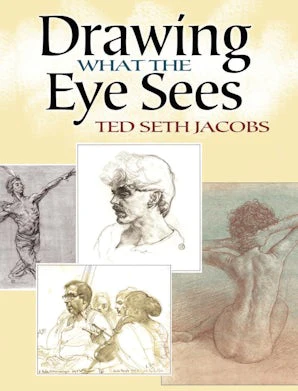
Heralded as a revolutionary right-brain approach to figure drawing, this guide focuses on mentality rather than technique. Ted Seth Jacobs offers personal reflections and advice on developing the ability to draw what the eye sees rather than what the mind dictates. More than 180 black-and-white drawings and eight pages of color illustrations reinforce his insights into such concepts as light, balance, and symmetry.
Jacobs' mental approaches include drawing as a philosophical expression, encouraging the mind and body to work together, and cultivating a relaxed but attentive mood. His observations on figure drawing range from the portrayal of forms in action and at rest to draped effects; and he explores the nature of shadow, reflected light, and other light-related issues. Above all, he encourages readers to challenge all assumptions about drawing and painting. A valuable teaching tool for students, this volume is also an excellent reference for professionals and amateurs.
Jacobs' mental approaches include drawing as a philosophical expression, encouraging the mind and body to work together, and cultivating a relaxed but attentive mood. His observations on figure drawing range from the portrayal of forms in action and at rest to draped effects; and he explores the nature of shadow, reflected light, and other light-related issues. Above all, he encourages readers to challenge all assumptions about drawing and painting. A valuable teaching tool for students, this volume is also an excellent reference for professionals and amateurs.
Reprint of the Watson-Guptill Publications, New York, 1991 edition.
figure drawing;visualization;positive and negative space;values and gesture;scale;angles;advanced drawing;body and form;art guide;drawing;art education;drawing techniques;white drawings;reflected light;art how to;art instruction;art reference;black and white drawings;light;balance;symmetry;drawing tips;drawing shadows;artists;art$11.99
Drawing What the Eye Sees—
$11.99
Product Information
Product Information
Shipping & Returns
Shipping & Returns
Description
Heralded as a revolutionary right-brain approach to figure drawing, this guide focuses on mentality rather than technique. Ted Seth Jacobs offers personal reflections and advice on developing the ability to draw what the eye sees rather than what the mind dictates. More than 180 black-and-white drawings and eight pages of color illustrations reinforce his insights into such concepts as light, balance, and symmetry.
Jacobs' mental approaches include drawing as a philosophical expression, encouraging the mind and body to work together, and cultivating a relaxed but attentive mood. His observations on figure drawing range from the portrayal of forms in action and at rest to draped effects; and he explores the nature of shadow, reflected light, and other light-related issues. Above all, he encourages readers to challenge all assumptions about drawing and painting. A valuable teaching tool for students, this volume is also an excellent reference for professionals and amateurs.
Jacobs' mental approaches include drawing as a philosophical expression, encouraging the mind and body to work together, and cultivating a relaxed but attentive mood. His observations on figure drawing range from the portrayal of forms in action and at rest to draped effects; and he explores the nature of shadow, reflected light, and other light-related issues. Above all, he encourages readers to challenge all assumptions about drawing and painting. A valuable teaching tool for students, this volume is also an excellent reference for professionals and amateurs.
Reprint of the Watson-Guptill Publications, New York, 1991 edition.
figure drawing;visualization;positive and negative space;values and gesture;scale;angles;advanced drawing;body and form;art guide;drawing;art education;drawing techniques;white drawings;reflected light;art how to;art instruction;art reference;black and white drawings;light;balance;symmetry;drawing tips;drawing shadows;artists;art