🎉 Up to 70% Off Selected ItemsShop Sale
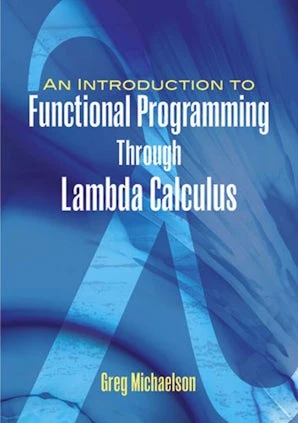
An Introduction to Functional Programming Through Lambda Calculus
Functional programming is rooted in lambda calculus, which constitutes the world's smallest programming language. This well-respected text offers an accessible introduction to functional programming concepts and techniques for students of mathematics and computer science. The treatment is as nontechnical as possible, and it assumes no prior knowledge of mathematics or functional programming. Cogent examples illuminate the central ideas, and numerous exercises appear throughout the text, offering reinforcement of key concepts. All problems feature complete solutions.
Reprint of the Addison-Wesley, 1989 edition.
mathematical logic; computer programming; computer science; programming languages; software; computer engineering; standard ml; common lisp; variable binding and substitution; model of computation; programming paradigm; building computer programs; formal system; function definition; function application; recursion; logic programming; computers; technology; mit press;functional language;paul graham;type classes;programming paradigms;time complexity;computer languages;teach computer;program design;pattern matching;logic programming;lisp programming;programming experience;memory management;language concepts;programming skills;linked lists;object-oriented programming;programming concepts;type system;category theory;purely functional;software engineers;data structures;visual basic;negative reviewers;science student;write code;computer scientists;programming languages;fundamental concepts;socratic method;software engineering;computer programs;complex systems;teach yourself;computer programming;gentle introduction;mathematically inclined;introductory text;computer science;serious student;poorly designed;waste time;artificial intelligence;recursions;non-deterministic;github;abelson;recursively;evaluator;clojure;monads;knuth;prolog;scala;zippers;sussman;computation;computational;haskell;recursive;compiler;algorithms;abstractions;schemer;java;programmers;computing;implementation;interpreter;imperative;syntax;cartoons;functions;freely;exercises;scheme;books on language concepts;books on type classes;books on teach computers;books on programming paradigms;books on object-oriented programmings;books on program designs;teaching computer;books on functional languages;books on programming experiences;books on mit presses;books on paul graham;books on logic programmings;books on computer languages;books on programming concepts$8.73
Original: $24.95
-65%An Introduction to Functional Programming Through Lambda Calculus—
$24.95
$8.73Product Information
Product Information
Shipping & Returns
Shipping & Returns
Description
Functional programming is rooted in lambda calculus, which constitutes the world's smallest programming language. This well-respected text offers an accessible introduction to functional programming concepts and techniques for students of mathematics and computer science. The treatment is as nontechnical as possible, and it assumes no prior knowledge of mathematics or functional programming. Cogent examples illuminate the central ideas, and numerous exercises appear throughout the text, offering reinforcement of key concepts. All problems feature complete solutions.
Reprint of the Addison-Wesley, 1989 edition.
mathematical logic; computer programming; computer science; programming languages; software; computer engineering; standard ml; common lisp; variable binding and substitution; model of computation; programming paradigm; building computer programs; formal system; function definition; function application; recursion; logic programming; computers; technology; mit press;functional language;paul graham;type classes;programming paradigms;time complexity;computer languages;teach computer;program design;pattern matching;logic programming;lisp programming;programming experience;memory management;language concepts;programming skills;linked lists;object-oriented programming;programming concepts;type system;category theory;purely functional;software engineers;data structures;visual basic;negative reviewers;science student;write code;computer scientists;programming languages;fundamental concepts;socratic method;software engineering;computer programs;complex systems;teach yourself;computer programming;gentle introduction;mathematically inclined;introductory text;computer science;serious student;poorly designed;waste time;artificial intelligence;recursions;non-deterministic;github;abelson;recursively;evaluator;clojure;monads;knuth;prolog;scala;zippers;sussman;computation;computational;haskell;recursive;compiler;algorithms;abstractions;schemer;java;programmers;computing;implementation;interpreter;imperative;syntax;cartoons;functions;freely;exercises;scheme;books on language concepts;books on type classes;books on teach computers;books on programming paradigms;books on object-oriented programmings;books on program designs;teaching computer;books on functional languages;books on programming experiences;books on mit presses;books on paul graham;books on logic programmings;books on computer languages;books on programming concepts