🎉 Up to 70% Off Selected ItemsShop Sale
Notes from the Underground
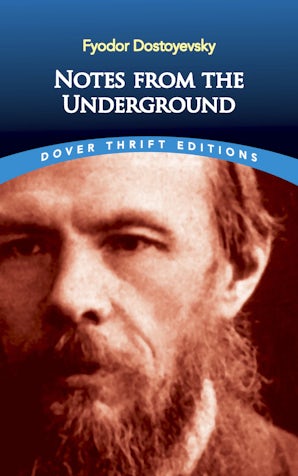
In 1864, just prior to the years in which he wrote his greatest novels — Crime and Punishment, The Idiot, The Possessed and The Brothers Karamazov — Fyodor Dostoyevsky (1821–1881) penned the darkly fascinating Notes from the Underground. Its nameless hero is a profoundly alienated individual in whose brooding self-analysis there is a search for the true and the good in a world of relative values and few absolutes. Moreover, the novel introduces themes — moral, religious, political and social — that dominated Dostoyevsky's later works. Notes from the Underground, then, aside from its own compelling qualities, offers readers an ideal introduction to the creative imagination, profundity and uncanny psychological penetration of one of the most influential novelists of the nineteenth century. Constance Garnett's authoritative translation is reprinted here, with a new introduction.
Reprinted from White Nights and Other Stories, The Macmillan Company, New York, 1918.
improve ones;ones mood;annotated translation;person's private;es una;unique value;wet snow;russian literary;man's psyche;pevear volokhonsky;contemporary voice;narrator's character;russian civil;underground man;grand inquisitor;human nonetheless;pathetically human;white nights;translator manages;observant eye;petty bureaucrat;century russian;remains relevant;western european;brothers karamazov;fallen asleep;modern man;russian literature;intellectually superior;civil servant;principal character;vivid depiction;human mind;human nature;obras;trabajo;weve;dostoievsky;rozanov;pulsation;chernyshevsky;esta;utopianism;hypersensitive;benches;lodges;penetration;1864;michelangelo;rationalism;existentialist;kirsten;existentialism;paradoxical;petersburg;liza;nietzsche;mediocrity;spiteful;self-loathing;tolstoy;unattractive;anti-hero;alienated;existential;monologue;linear;morally;prostitute;evokes;punishment;dostoevsky;mishkin;fyodor dostoyevsky;constance garnett;russian;books on annotated translations;books on western europeans;books on human minds;books on human natures;books on principal characters;books on dostoievsky;books on white nights;books on lodges;books on narrator 's characters;books on weves;books on pulsations;books on contemporary voices;books on underground men;books on rozanov;books on russian literatures;books on modern men;books on trabajos;books on improve ones;books on ones moods;improving ones;books on civil servants;books on esta;books on unique values$5.00
Notes from the Underground—
$5.00
Product Information
Product Information
Shipping & Returns
Shipping & Returns
Description
In 1864, just prior to the years in which he wrote his greatest novels — Crime and Punishment, The Idiot, The Possessed and The Brothers Karamazov — Fyodor Dostoyevsky (1821–1881) penned the darkly fascinating Notes from the Underground. Its nameless hero is a profoundly alienated individual in whose brooding self-analysis there is a search for the true and the good in a world of relative values and few absolutes. Moreover, the novel introduces themes — moral, religious, political and social — that dominated Dostoyevsky's later works. Notes from the Underground, then, aside from its own compelling qualities, offers readers an ideal introduction to the creative imagination, profundity and uncanny psychological penetration of one of the most influential novelists of the nineteenth century. Constance Garnett's authoritative translation is reprinted here, with a new introduction.
Reprinted from White Nights and Other Stories, The Macmillan Company, New York, 1918.
improve ones;ones mood;annotated translation;person's private;es una;unique value;wet snow;russian literary;man's psyche;pevear volokhonsky;contemporary voice;narrator's character;russian civil;underground man;grand inquisitor;human nonetheless;pathetically human;white nights;translator manages;observant eye;petty bureaucrat;century russian;remains relevant;western european;brothers karamazov;fallen asleep;modern man;russian literature;intellectually superior;civil servant;principal character;vivid depiction;human mind;human nature;obras;trabajo;weve;dostoievsky;rozanov;pulsation;chernyshevsky;esta;utopianism;hypersensitive;benches;lodges;penetration;1864;michelangelo;rationalism;existentialist;kirsten;existentialism;paradoxical;petersburg;liza;nietzsche;mediocrity;spiteful;self-loathing;tolstoy;unattractive;anti-hero;alienated;existential;monologue;linear;morally;prostitute;evokes;punishment;dostoevsky;mishkin;fyodor dostoyevsky;constance garnett;russian;books on annotated translations;books on western europeans;books on human minds;books on human natures;books on principal characters;books on dostoievsky;books on white nights;books on lodges;books on narrator 's characters;books on weves;books on pulsations;books on contemporary voices;books on underground men;books on rozanov;books on russian literatures;books on modern men;books on trabajos;books on improve ones;books on ones moods;improving ones;books on civil servants;books on esta;books on unique values