🎉 Up to 70% Off Selected ItemsShop Sale
Victorian and Edwardian Fashion
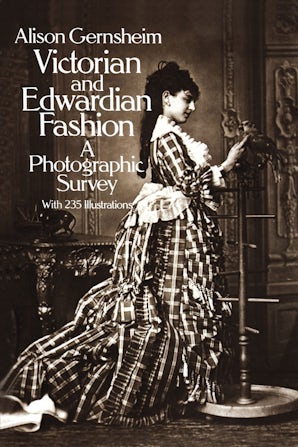
Since the invention of photography there has not been a history of fashion completely illustrated by photographs — until this one. Photography historian Alison Gernsheim first studied Victorian and Edwardian fashion in order to be able to date photographs in her collection. Of course the photos soon proved to be the best of all fashion plates — authentic, detailed, as decorative and charming as top fashion illustration. When united with identifications and descriptions of the chief costume articles, and a commentary that includes childhood memories of the period, the resulting history is doubly indispensable — equally useful and delightful to serious and casual readers.
The invention of photography preceded that of the crinoline by about a decade. Pre-crinoline bonnets, stovepipe hats, and deep décolletage are featured in the first of these 235 illustrations — including a beautiful 1840 daguerreotype portrait of a lady that is the earliest study of its kind extant. From 1855 to the 1870s the crinoline gave shape (whether barrel, bell, teapot, or otherwise) to English women, and their shapes fill many of these full and half-page photos. English men went beardless in top hats and frock coats; as in other eras, the sporting wear of the previous generation became acceptable morning and evening town attire. Styles and accoutrements came and went — moustaches, straw hats, bustles and bodice line, petticoats, corsets, shawls and falsies, flounces, ruffles, lace, and materials — satin, silk, velvet, woolen underwear, full-length sable, and osprey feathers. Many of the models for these fashions were already fashionable enough — Oscar Wilde, Aubrey Beardsley, Lillie Langtry, Winston Churchill, many archdukes, duchesses, counts, princes, and Queen Victoria herself. Photographers are identified where possible, and include Nadar, Lewis Carroll, and the Downeys. Every photograph is captioned and annotated.
The invention of photography preceded that of the crinoline by about a decade. Pre-crinoline bonnets, stovepipe hats, and deep décolletage are featured in the first of these 235 illustrations — including a beautiful 1840 daguerreotype portrait of a lady that is the earliest study of its kind extant. From 1855 to the 1870s the crinoline gave shape (whether barrel, bell, teapot, or otherwise) to English women, and their shapes fill many of these full and half-page photos. English men went beardless in top hats and frock coats; as in other eras, the sporting wear of the previous generation became acceptable morning and evening town attire. Styles and accoutrements came and went — moustaches, straw hats, bustles and bodice line, petticoats, corsets, shawls and falsies, flounces, ruffles, lace, and materials — satin, silk, velvet, woolen underwear, full-length sable, and osprey feathers. Many of the models for these fashions were already fashionable enough — Oscar Wilde, Aubrey Beardsley, Lillie Langtry, Winston Churchill, many archdukes, duchesses, counts, princes, and Queen Victoria herself. Photographers are identified where possible, and include Nadar, Lewis Carroll, and the Downeys. Every photograph is captioned and annotated.
Reprint of Fashion and Reality 1840–1914, Faber and Faber, London, 1963.
victorian customs;children's clothing;style fashion;authentic photos;information density;men's fashion;goodman looks;victorian clothes;impossibly elegant;silk flowers;relative difficulty;brush teeth;cross referenced;text references;bodies wearing;count fool;edwardian fashions;victorian clothing;victorian fashions;ms goodman;laundry day;fashion plates;french fashion;edwardian eras;century fashion;la mode;victorian history;social historian;hands-on experience;photographs spanning;women wore;victorian woman;victorian edwardian;living history;victorian life;hand experience;victorian period;victorian age;victorian times;lower class;social history;victorian england;victorian era;daily life;everyday life;19th century;dawn-to-dusk;bazar;crinoline;corsetry;cuttlefish;re-enactor;opiates;starch;soot;shampoo;reenactors;cosmetics;corsets;grooming;1860;victorians;garments;dusk;hygiene;brushing;bathing;underwear;leisure;washing;sewing;costumes;privy;hats;dresses;item;worn;ruth;books on brush teeth;books on silk flowers;books on edwardian eras;books on french fashions;books on text references;books on style fashions;books on victorian women;books on hands-on experiences;books on men 's fashions;crossing referenced;books on living histories;books on century fashions;books on children 's clothings;books on la modes;books on fashion plates;live history;books on victorian histories;books on victorian fashions;books on social historians;books on victorian customs;books on information densities$6.98
Original: $19.95
-65%Victorian and Edwardian Fashion—
$19.95
$6.98Product Information
Product Information
Shipping & Returns
Shipping & Returns
Description
Since the invention of photography there has not been a history of fashion completely illustrated by photographs — until this one. Photography historian Alison Gernsheim first studied Victorian and Edwardian fashion in order to be able to date photographs in her collection. Of course the photos soon proved to be the best of all fashion plates — authentic, detailed, as decorative and charming as top fashion illustration. When united with identifications and descriptions of the chief costume articles, and a commentary that includes childhood memories of the period, the resulting history is doubly indispensable — equally useful and delightful to serious and casual readers.
The invention of photography preceded that of the crinoline by about a decade. Pre-crinoline bonnets, stovepipe hats, and deep décolletage are featured in the first of these 235 illustrations — including a beautiful 1840 daguerreotype portrait of a lady that is the earliest study of its kind extant. From 1855 to the 1870s the crinoline gave shape (whether barrel, bell, teapot, or otherwise) to English women, and their shapes fill many of these full and half-page photos. English men went beardless in top hats and frock coats; as in other eras, the sporting wear of the previous generation became acceptable morning and evening town attire. Styles and accoutrements came and went — moustaches, straw hats, bustles and bodice line, petticoats, corsets, shawls and falsies, flounces, ruffles, lace, and materials — satin, silk, velvet, woolen underwear, full-length sable, and osprey feathers. Many of the models for these fashions were already fashionable enough — Oscar Wilde, Aubrey Beardsley, Lillie Langtry, Winston Churchill, many archdukes, duchesses, counts, princes, and Queen Victoria herself. Photographers are identified where possible, and include Nadar, Lewis Carroll, and the Downeys. Every photograph is captioned and annotated.
The invention of photography preceded that of the crinoline by about a decade. Pre-crinoline bonnets, stovepipe hats, and deep décolletage are featured in the first of these 235 illustrations — including a beautiful 1840 daguerreotype portrait of a lady that is the earliest study of its kind extant. From 1855 to the 1870s the crinoline gave shape (whether barrel, bell, teapot, or otherwise) to English women, and their shapes fill many of these full and half-page photos. English men went beardless in top hats and frock coats; as in other eras, the sporting wear of the previous generation became acceptable morning and evening town attire. Styles and accoutrements came and went — moustaches, straw hats, bustles and bodice line, petticoats, corsets, shawls and falsies, flounces, ruffles, lace, and materials — satin, silk, velvet, woolen underwear, full-length sable, and osprey feathers. Many of the models for these fashions were already fashionable enough — Oscar Wilde, Aubrey Beardsley, Lillie Langtry, Winston Churchill, many archdukes, duchesses, counts, princes, and Queen Victoria herself. Photographers are identified where possible, and include Nadar, Lewis Carroll, and the Downeys. Every photograph is captioned and annotated.
Reprint of Fashion and Reality 1840–1914, Faber and Faber, London, 1963.
victorian customs;children's clothing;style fashion;authentic photos;information density;men's fashion;goodman looks;victorian clothes;impossibly elegant;silk flowers;relative difficulty;brush teeth;cross referenced;text references;bodies wearing;count fool;edwardian fashions;victorian clothing;victorian fashions;ms goodman;laundry day;fashion plates;french fashion;edwardian eras;century fashion;la mode;victorian history;social historian;hands-on experience;photographs spanning;women wore;victorian woman;victorian edwardian;living history;victorian life;hand experience;victorian period;victorian age;victorian times;lower class;social history;victorian england;victorian era;daily life;everyday life;19th century;dawn-to-dusk;bazar;crinoline;corsetry;cuttlefish;re-enactor;opiates;starch;soot;shampoo;reenactors;cosmetics;corsets;grooming;1860;victorians;garments;dusk;hygiene;brushing;bathing;underwear;leisure;washing;sewing;costumes;privy;hats;dresses;item;worn;ruth;books on brush teeth;books on silk flowers;books on edwardian eras;books on french fashions;books on text references;books on style fashions;books on victorian women;books on hands-on experiences;books on men 's fashions;crossing referenced;books on living histories;books on century fashions;books on children 's clothings;books on la modes;books on fashion plates;live history;books on victorian histories;books on victorian fashions;books on social historians;books on victorian customs;books on information densities