🎉 Up to 70% Off Selected ItemsShop Sale
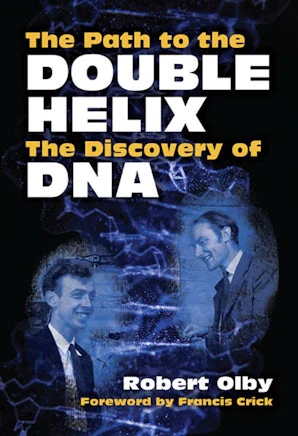
The Path to the Double Helix
The 1953 discovery by James Watson and Francis Crick of the molecular structure of DNA ranks among the most dramatic events in the history of science. In this lively, perceptive, and scholarly study, a noted historian of science provides the first in-depth account of this milestone's achievement.
Combining scientific and historical approaches, the narrative vividly recaptures the excitement of the conceptualization and evolution of ideas that led to the discovery of the genetic "secret of life." The story unfolds along several major lines: long-chain macromolecules; nucleic acids; bacterial transformations; the intellectual evolutions of physicists, chemists, and biologists; and the cross-pollination of scientific disciplines that unlocked the structural secrets of DNA. Francis Crick provides an illuminating Foreword for this abundantly illustrated and thought-provoking retelling of a great scientific detective story.
Combining scientific and historical approaches, the narrative vividly recaptures the excitement of the conceptualization and evolution of ideas that led to the discovery of the genetic "secret of life." The story unfolds along several major lines: long-chain macromolecules; nucleic acids; bacterial transformations; the intellectual evolutions of physicists, chemists, and biologists; and the cross-pollination of scientific disciplines that unlocked the structural secrets of DNA. Francis Crick provides an illuminating Foreword for this abundantly illustrated and thought-provoking retelling of a great scientific detective story.
Reprint of the University of Washington Press, Seattle, 1974 edition.
genetics and genomics; double stranded molecules; molecular biology; nucleic acids; dna; rna; life sciences; cell biology; molecular structure; long chain macromolecules; james watson; francis crick; base pairs; xyz coordinates; genetic information; hybridization; history of science; great discoveries in science; science and math; experiments; DNA; history of science; Francis Crick; James Watson$24.95
The Path to the Double Helix—
$24.95
Product Information
Product Information
Shipping & Returns
Shipping & Returns
Description
The 1953 discovery by James Watson and Francis Crick of the molecular structure of DNA ranks among the most dramatic events in the history of science. In this lively, perceptive, and scholarly study, a noted historian of science provides the first in-depth account of this milestone's achievement.
Combining scientific and historical approaches, the narrative vividly recaptures the excitement of the conceptualization and evolution of ideas that led to the discovery of the genetic "secret of life." The story unfolds along several major lines: long-chain macromolecules; nucleic acids; bacterial transformations; the intellectual evolutions of physicists, chemists, and biologists; and the cross-pollination of scientific disciplines that unlocked the structural secrets of DNA. Francis Crick provides an illuminating Foreword for this abundantly illustrated and thought-provoking retelling of a great scientific detective story.
Combining scientific and historical approaches, the narrative vividly recaptures the excitement of the conceptualization and evolution of ideas that led to the discovery of the genetic "secret of life." The story unfolds along several major lines: long-chain macromolecules; nucleic acids; bacterial transformations; the intellectual evolutions of physicists, chemists, and biologists; and the cross-pollination of scientific disciplines that unlocked the structural secrets of DNA. Francis Crick provides an illuminating Foreword for this abundantly illustrated and thought-provoking retelling of a great scientific detective story.
Reprint of the University of Washington Press, Seattle, 1974 edition.
genetics and genomics; double stranded molecules; molecular biology; nucleic acids; dna; rna; life sciences; cell biology; molecular structure; long chain macromolecules; james watson; francis crick; base pairs; xyz coordinates; genetic information; hybridization; history of science; great discoveries in science; science and math; experiments; DNA; history of science; Francis Crick; James Watson