🎉 Up to 70% Off Selected ItemsShop Sale
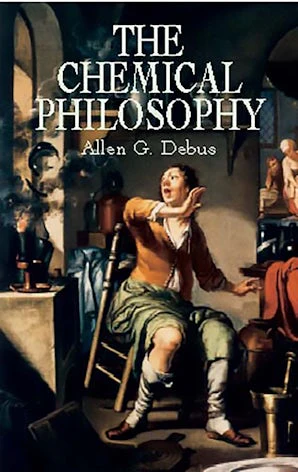
The Chemical Philosophy
Swiss-born physician and alchemist Paracelsus (1493–1541) and his disciples espoused a doctrine they proclaimed as a truly Christian interpretation of nature in chemistry. Drawing upon a mixture of ancient, medieval, and Renaissance sources, they developed a new philosophy that interpreted both macrocosmic and microcosmic events through the personal observations of the chemist and the Divine Grace of the Lord. Until the publication of this book, however, the breadth and vicissitudes of the Paracelsian approach to nature and medicine had been little studied.
This volume spans more than a century, providing a rich record of the major interests of the Paracelsian and other chemical philosophers and the conflicts in which they engaged with their contemporaries. It examines chemistry and nature in the Renaissance, the Paracelsian debates, the theories of Robert Fludd, the Helmontian restatement of the chemical philosophy, and many other issues of this transitional era in the history of science.
Enhanced with 36 black-and-white illustrations, this well-researched and compellingly related study will fascinate students of the history of science, chemistry, and medicine.
This volume spans more than a century, providing a rich record of the major interests of the Paracelsian and other chemical philosophers and the conflicts in which they engaged with their contemporaries. It examines chemistry and nature in the Renaissance, the Paracelsian debates, the theories of Robert Fludd, the Helmontian restatement of the chemical philosophy, and many other issues of this transitional era in the history of science.
Enhanced with 36 black-and-white illustrations, this well-researched and compellingly related study will fascinate students of the history of science, chemistry, and medicine.
Revised republication in one volume of The Chemical Philosophy: Paracelsian Science and Medicine in the Sixteenth and Seventeenth Centuries (2 volumes), published by Science History Publications, a division of Neale Watson Academic Publications, New York, 1977.
$10.48
Original: $29.95
-65%The Chemical Philosophy—
$29.95
$10.48Product Information
Product Information
Shipping & Returns
Shipping & Returns
Description
Swiss-born physician and alchemist Paracelsus (1493–1541) and his disciples espoused a doctrine they proclaimed as a truly Christian interpretation of nature in chemistry. Drawing upon a mixture of ancient, medieval, and Renaissance sources, they developed a new philosophy that interpreted both macrocosmic and microcosmic events through the personal observations of the chemist and the Divine Grace of the Lord. Until the publication of this book, however, the breadth and vicissitudes of the Paracelsian approach to nature and medicine had been little studied.
This volume spans more than a century, providing a rich record of the major interests of the Paracelsian and other chemical philosophers and the conflicts in which they engaged with their contemporaries. It examines chemistry and nature in the Renaissance, the Paracelsian debates, the theories of Robert Fludd, the Helmontian restatement of the chemical philosophy, and many other issues of this transitional era in the history of science.
Enhanced with 36 black-and-white illustrations, this well-researched and compellingly related study will fascinate students of the history of science, chemistry, and medicine.
This volume spans more than a century, providing a rich record of the major interests of the Paracelsian and other chemical philosophers and the conflicts in which they engaged with their contemporaries. It examines chemistry and nature in the Renaissance, the Paracelsian debates, the theories of Robert Fludd, the Helmontian restatement of the chemical philosophy, and many other issues of this transitional era in the history of science.
Enhanced with 36 black-and-white illustrations, this well-researched and compellingly related study will fascinate students of the history of science, chemistry, and medicine.
Revised republication in one volume of The Chemical Philosophy: Paracelsian Science and Medicine in the Sixteenth and Seventeenth Centuries (2 volumes), published by Science History Publications, a division of Neale Watson Academic Publications, New York, 1977.