🎉 Up to 70% Off Selected ItemsShop Sale
HomeStore

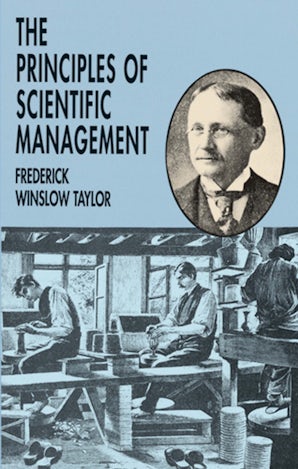
The Principles of Scientific Management

Product image 1

The Principles of Scientific Management

For more than 80 years, this influential work by Frederick Winslow Taylor — the pioneer of scientific management studies — has inspired administrators and students of managerial techniques to adopt productivity-increasing procedures. Indeed, this book laid the groundwork for modern organization and decision theory.
As an engineer for a steel company, Taylor made careful experiments to determine the best way of performing each operation and the amount of time it required, analyzing the materials, tools, and work sequence, and establishing a clear division of labor between management and workers. His experiments resulted in the formulation of the principles expounded in this remarkable essay, first published in 1911.
Taylor advocated a scientific management system that develops leaders by organizing workers for efficient cooperation, rather than curtailing inefficiency by searching for exceptional leaders someone else has trained. The whole system rests upon a foundation of clearly defined laws and rules. Moreover, the fundamental principles of scientific management apply to all kinds of human activities, from the simplest individual acts to the most elaborate cooperative efforts of mighty corporations. Correct application of these principles, according to Taylor, will yield truly astonishing results.

motion study;twelve kids;bantam classics;frank jr;cognitive approach;robert maynard;national wealth;family council;frank sr;liberty fund;feedback mechanism;value theory;gilbreth jr;ernestine gilbreth;contemporary mainstream;exchange value;virtuous cycle;lillian gilbreth;frank gilbreth;gilbreth children;labor theory;agricultural production;foreign trade;howard gardner;efficiency experts;gilbreth family;market prices;modern economics;scottish enlightenment;moral sentiments;silk stockings;moral philosopher;effective leadership;mahatma gandhi;economic principles;saving time;twelve children;dozen children;invisible hand;theoretical framework;save time;family run;political economy;stage play;morse code;pope john;economic system;economic history;economic theory;karl marx;practical jokes;steve martin;emotions portrayed;human mind;surprisingly readable;martin luther;18th century;cannan;non-intervention;offshoring;gilbreths;physiocrats;ergonomics;mercantilist;taylorism;maslow;mercantilism;tonsils;monopolies;lillie;unschooled;belles;oppenheimer;ricardo;taxation;commodities;1776;productivity;economists;cheaper;wages;annotated;labour;productive;capitalism;funniest;division;nations;influential;america;books on robert maynard;books on frank jrs;books on national wealths;books on liberty funds;books on exchange values;books on bantam classics;books on motion studies;books on frank srs;books on family councils;books on twelve kids;books on cognitive approaches;books on value theories
$2.43

Original: $6.95

-65%
The Principles of Scientific Management—

$6.95

$2.43

Product Information

Shipping & Returns

Description

For more than 80 years, this influential work by Frederick Winslow Taylor — the pioneer of scientific management studies — has inspired administrators and students of managerial techniques to adopt productivity-increasing procedures. Indeed, this book laid the groundwork for modern organization and decision theory.
As an engineer for a steel company, Taylor made careful experiments to determine the best way of performing each operation and the amount of time it required, analyzing the materials, tools, and work sequence, and establishing a clear division of labor between management and workers. His experiments resulted in the formulation of the principles expounded in this remarkable essay, first published in 1911.
Taylor advocated a scientific management system that develops leaders by organizing workers for efficient cooperation, rather than curtailing inefficiency by searching for exceptional leaders someone else has trained. The whole system rests upon a foundation of clearly defined laws and rules. Moreover, the fundamental principles of scientific management apply to all kinds of human activities, from the simplest individual acts to the most elaborate cooperative efforts of mighty corporations. Correct application of these principles, according to Taylor, will yield truly astonishing results.

motion study;twelve kids;bantam classics;frank jr;cognitive approach;robert maynard;national wealth;family council;frank sr;liberty fund;feedback mechanism;value theory;gilbreth jr;ernestine gilbreth;contemporary mainstream;exchange value;virtuous cycle;lillian gilbreth;frank gilbreth;gilbreth children;labor theory;agricultural production;foreign trade;howard gardner;efficiency experts;gilbreth family;market prices;modern economics;scottish enlightenment;moral sentiments;silk stockings;moral philosopher;effective leadership;mahatma gandhi;economic principles;saving time;twelve children;dozen children;invisible hand;theoretical framework;save time;family run;political economy;stage play;morse code;pope john;economic system;economic history;economic theory;karl marx;practical jokes;steve martin;emotions portrayed;human mind;surprisingly readable;martin luther;18th century;cannan;non-intervention;offshoring;gilbreths;physiocrats;ergonomics;mercantilist;taylorism;maslow;mercantilism;tonsils;monopolies;lillie;unschooled;belles;oppenheimer;ricardo;taxation;commodities;1776;productivity;economists;cheaper;wages;annotated;labour;productive;capitalism;funniest;division;nations;influential;america;books on robert maynard;books on frank jrs;books on national wealths;books on liberty funds;books on exchange values;books on bantam classics;books on motion studies;books on frank srs;books on family councils;books on twelve kids;books on cognitive approaches;books on value theories
The Principles of Scientific Management | Dover Publications