🎉 Up to 70% Off Selected ItemsShop Sale
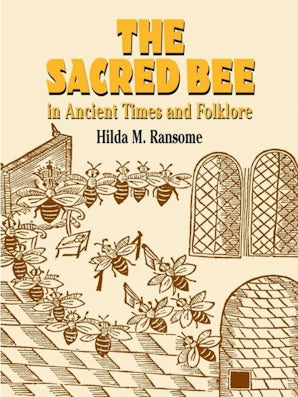
The Sacred Bee in Ancient Times and Folklore
No creature has provided man with so much wholesome food as the honey bee. Equally impressive is the number of beliefs and superstitions the industrious insect has inspired. Its honey, which was known to the ancient Greeks as the “food of the Gods,” played an important role in early religious rites and was also mentioned in the folklore of many peoples. Hilda Ransome's well-documented and copiously illustrated study of bees focuses on this valuable byproduct of nature and its creator — the "sacred" bee.
Chapters cover the folklore of bees and bee culture — from Egyptian, Babylonian, Chinese, Hittite, and other ancient sources as well as practices in modern England, France, and Central Europe. Thirty-five plates of rare black-and-white illustrations depict bees, hives, and beekeepers as they appear in ancient paintings and sculpture, on coins, jewelry, and Mayan glyphs; and carved into African tree trunks. Folk stories from Finland and the bee in America are also described.
Hailed by The New York Times as possessing an "oddity, beauty, and broad scholarly interest," this unusual book will attract a wide audience — nature lovers and folklore enthusiasts included.
Chapters cover the folklore of bees and bee culture — from Egyptian, Babylonian, Chinese, Hittite, and other ancient sources as well as practices in modern England, France, and Central Europe. Thirty-five plates of rare black-and-white illustrations depict bees, hives, and beekeepers as they appear in ancient paintings and sculpture, on coins, jewelry, and Mayan glyphs; and carved into African tree trunks. Folk stories from Finland and the bee in America are also described.
Hailed by The New York Times as possessing an "oddity, beauty, and broad scholarly interest," this unusual book will attract a wide audience — nature lovers and folklore enthusiasts included.
Reprint of the George Allen & Unwin, London, 1937 edition.
ancient mythology;home site;bee master;bee culture;swarm intelligence;bees play;bee keepers;bee pollen;hall meetings;bee behavior;biology department;shamanic initiation;verb 'to;bee colony;faculty meetings;bee society;social insects;reach consensus;konrad lorenz;secret teachings;bee keeping;bee hive;cave drawings;collapse disorder;keeping bees;ancient tradition;worker bees;colony collapse;house hunting;flowering plants;tori amos;silence reigned;honey bees;cornell university;decision-making process;rational mind;england town;queen bee;scientific method;mutual respect;natural history;natural world;inner workings;buffon;gower;pliny;loeb;resins;propolis;xerces;integrator;foragers;hindu;seeley;quorum;superorganism;waggle;pollinators;bee-keeping;welsh;pollination;honeybees;beekeepers;buxton;invisibly;travers;swarms;hives;shamanism;beekeeping;swarming;scouts;threshold;shaman;painstaking;democracy;collective;sacred;experiments;books on house huntings;books on bee keepers;books on bee cultures;books on social insects;books on flowering plants;books on home sites;books on honey bees;books on hall meetings;books on secret teachings;books on bee colonies;books on swarm intelligences;books on worker bees;books on ancient traditions;books on cornell universities;books on bee behaviors;books on ancient mythologies;books on biology departments;books on bee societies;books on bee hives;books on tori amos;books on bee masters;books on bee pollens;books on konrad lorenz;verbing 'to
$5.93
Original: $16.95
-65%The Sacred Bee in Ancient Times and Folklore—
$16.95
$5.93Product Information
Product Information
Shipping & Returns
Shipping & Returns
Description
No creature has provided man with so much wholesome food as the honey bee. Equally impressive is the number of beliefs and superstitions the industrious insect has inspired. Its honey, which was known to the ancient Greeks as the “food of the Gods,” played an important role in early religious rites and was also mentioned in the folklore of many peoples. Hilda Ransome's well-documented and copiously illustrated study of bees focuses on this valuable byproduct of nature and its creator — the "sacred" bee.
Chapters cover the folklore of bees and bee culture — from Egyptian, Babylonian, Chinese, Hittite, and other ancient sources as well as practices in modern England, France, and Central Europe. Thirty-five plates of rare black-and-white illustrations depict bees, hives, and beekeepers as they appear in ancient paintings and sculpture, on coins, jewelry, and Mayan glyphs; and carved into African tree trunks. Folk stories from Finland and the bee in America are also described.
Hailed by The New York Times as possessing an "oddity, beauty, and broad scholarly interest," this unusual book will attract a wide audience — nature lovers and folklore enthusiasts included.
Chapters cover the folklore of bees and bee culture — from Egyptian, Babylonian, Chinese, Hittite, and other ancient sources as well as practices in modern England, France, and Central Europe. Thirty-five plates of rare black-and-white illustrations depict bees, hives, and beekeepers as they appear in ancient paintings and sculpture, on coins, jewelry, and Mayan glyphs; and carved into African tree trunks. Folk stories from Finland and the bee in America are also described.
Hailed by The New York Times as possessing an "oddity, beauty, and broad scholarly interest," this unusual book will attract a wide audience — nature lovers and folklore enthusiasts included.
Reprint of the George Allen & Unwin, London, 1937 edition.
ancient mythology;home site;bee master;bee culture;swarm intelligence;bees play;bee keepers;bee pollen;hall meetings;bee behavior;biology department;shamanic initiation;verb 'to;bee colony;faculty meetings;bee society;social insects;reach consensus;konrad lorenz;secret teachings;bee keeping;bee hive;cave drawings;collapse disorder;keeping bees;ancient tradition;worker bees;colony collapse;house hunting;flowering plants;tori amos;silence reigned;honey bees;cornell university;decision-making process;rational mind;england town;queen bee;scientific method;mutual respect;natural history;natural world;inner workings;buffon;gower;pliny;loeb;resins;propolis;xerces;integrator;foragers;hindu;seeley;quorum;superorganism;waggle;pollinators;bee-keeping;welsh;pollination;honeybees;beekeepers;buxton;invisibly;travers;swarms;hives;shamanism;beekeeping;swarming;scouts;threshold;shaman;painstaking;democracy;collective;sacred;experiments;books on house huntings;books on bee keepers;books on bee cultures;books on social insects;books on flowering plants;books on home sites;books on honey bees;books on hall meetings;books on secret teachings;books on bee colonies;books on swarm intelligences;books on worker bees;books on ancient traditions;books on cornell universities;books on bee behaviors;books on ancient mythologies;books on biology departments;books on bee societies;books on bee hives;books on tori amos;books on bee masters;books on bee pollens;books on konrad lorenz;verbing 'to