🎉 Up to 70% Off Selected ItemsShop Sale
HomeStore

The Way of All Flesh

Product image 1

The Way of All Flesh

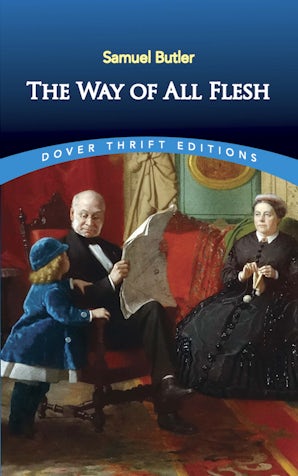
Written between 1873 and 1884 and published posthumously in 1903, The Way of All Flesh is regarded by some as the first twentieth-century novel. Samuel Butler's autobiographical account of a harsh upbringing and troubled adulthood shines an iconoclastic light on the hypocrisy of a Victorian clerical family's domestic life. It also foreshadows the crumbling of nineteenth-century bourgeois ideals in the aftermath of the First World War, as well as the ways in which succeeding generations have questioned conventional values.
Hailed by George Bernard Shaw as "one of the summits of human achievement," this chronicle of the life and loves of Ernest Pontifex spans four generations, focusing chiefly on the relationship between Ernest and his father, Theobald. Written in the wake of Darwin's Origin of Species, it reflects the dawning consciousness of heredity and environment as determinants of character. Along the way, it offers a powerfully satirical indictment of Victorian England's major institutions—the family, the church, and the rigidly hierarchical class structure.


Unabridged republication of the edition as published by Grant Richards, London, 1903.
period english;classics club;subtle brand;first-rate literature;victorian middle-class;independent income;outstanding literature;political domination;key doctrines;singular figure;ordained anglican;historical obscurity;victorian family;victorian values;religiously fanatical;abject suffering;narrator rarely;dialogues flow;robust account;frequently observed;reviewers speak;marked emphasis;somewhat antagonistic;human bondage;modern library;particular era;joseph conrad;william faulkner;evelyn waugh;victorian society;james joyce;henry james;victorian era;nineteenth century;human nature;wage-slavery;theobold;bigamous;erewhon;dickensian-type;streatfeild;1835;absolutist;1884;godson;1902;validation;1903;great-grandfather;clergyman;library's;godfather;inconsistency;clergy;everyman;posthumously;semi-autobiographical;railway;darwin;scathing;hypocrisy;institutions;penguin;autobiographical;upbringing;christina;dreiser;george pontifex;george bernard shaw;books on human natures;books on nineteenth centuries;books on modern libraries;books on streatfeild;books on political dominations;books on classics clubs;books on first-rate literatures;books on victorian families;books on independent incomes;books on joseph conrad;books on victorian societies;books on human bondages;books on erewhons;books on subtle brands;books on victorian values;books on outstanding literatures;books on 1835;books on evelyn waughs;books on godfathers;books on victorian eras;books on key doctrines;books on henry james
$1.75

Original: $5.00

-65%
The Way of All Flesh—

$5.00

$1.75

Product Information

Shipping & Returns

Description

Written between 1873 and 1884 and published posthumously in 1903, The Way of All Flesh is regarded by some as the first twentieth-century novel. Samuel Butler's autobiographical account of a harsh upbringing and troubled adulthood shines an iconoclastic light on the hypocrisy of a Victorian clerical family's domestic life. It also foreshadows the crumbling of nineteenth-century bourgeois ideals in the aftermath of the First World War, as well as the ways in which succeeding generations have questioned conventional values.
Hailed by George Bernard Shaw as "one of the summits of human achievement," this chronicle of the life and loves of Ernest Pontifex spans four generations, focusing chiefly on the relationship between Ernest and his father, Theobald. Written in the wake of Darwin's Origin of Species, it reflects the dawning consciousness of heredity and environment as determinants of character. Along the way, it offers a powerfully satirical indictment of Victorian England's major institutions—the family, the church, and the rigidly hierarchical class structure.


Unabridged republication of the edition as published by Grant Richards, London, 1903.
period english;classics club;subtle brand;first-rate literature;victorian middle-class;independent income;outstanding literature;political domination;key doctrines;singular figure;ordained anglican;historical obscurity;victorian family;victorian values;religiously fanatical;abject suffering;narrator rarely;dialogues flow;robust account;frequently observed;reviewers speak;marked emphasis;somewhat antagonistic;human bondage;modern library;particular era;joseph conrad;william faulkner;evelyn waugh;victorian society;james joyce;henry james;victorian era;nineteenth century;human nature;wage-slavery;theobold;bigamous;erewhon;dickensian-type;streatfeild;1835;absolutist;1884;godson;1902;validation;1903;great-grandfather;clergyman;library's;godfather;inconsistency;clergy;everyman;posthumously;semi-autobiographical;railway;darwin;scathing;hypocrisy;institutions;penguin;autobiographical;upbringing;christina;dreiser;george pontifex;george bernard shaw;books on human natures;books on nineteenth centuries;books on modern libraries;books on streatfeild;books on political dominations;books on classics clubs;books on first-rate literatures;books on victorian families;books on independent incomes;books on joseph conrad;books on victorian societies;books on human bondages;books on erewhons;books on subtle brands;books on victorian values;books on outstanding literatures;books on 1835;books on evelyn waughs;books on godfathers;books on victorian eras;books on key doctrines;books on henry james
The Way of All Flesh | Dover Publications